

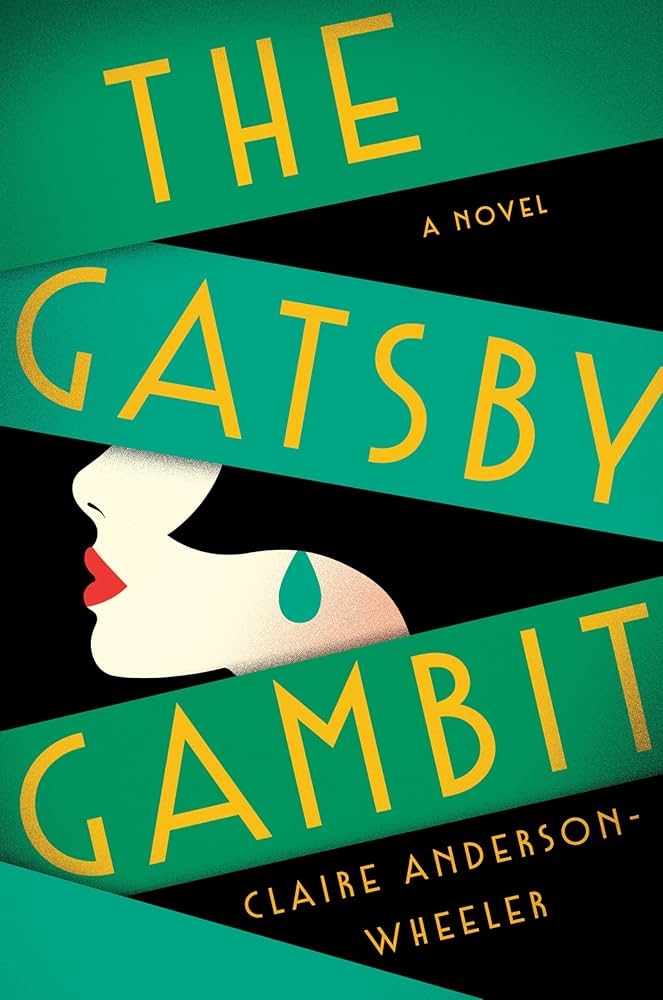
Summary
Greta Gatsby has at last graduated from her stifling finishing school, is on the brink of turning twenty-one, and hopes to finally have her own legendary summer with her brother and guardian, Jay, at his West Egg mansion. Orphaned along with him some years before the war, Greta has seen her fortunes rise on the high tide of his entrepreneurship, even as she has remained in the shadows of his life—too young to join his late-night soirees or infamous summer parties and too shy to trade banter and barbs with his cadre of new friends.
Jay’s wish for her has been to shake off their new-money stain and gain a level of social acceptance he’s never quite enjoyed. She’s simply looking forward to reconnecting with him and embracing life as a modern young woman. She arrives at West Egg with a fresh and daring new bob hairdo to find Daisy and Tom Buchanan also summering at the mansion, along with Nick Carraway and Jordan Baker. And it’s hard to be noticed when the luminous and multifaceted Daisy Buchanan is in the same room.
But when one of their guests is murdered, Greta turns sleuth as the veil is lifted on Gatsby’s household and its inhabitants, including its staff. Tightly plotted, with thrilling prose and sensuous detail, this homage to and reinvention of a world American readers have lionized for generations ultimately reveals the secrets and lies that perpetuate the romantic notion that being rich is the answer to all of life’s problems.

The Story Behind The Great Gatsby:
In 1925, famous twentieth-century American author, F. Scott Fitzgerald published his most popular work, The Great Gatsby. In this book, the titular character, Jay Gatsby, a millionaire reunites with his first love, Daisy, who married the wealthy Tom Buchanan while he was fighting in World War I. It deals a lot with his infatuation with her. Claire Anderson-Wheeler’s The Gatsby Gambit is based off of this book. That is why I am discussing the original work and the inspiration behind it.
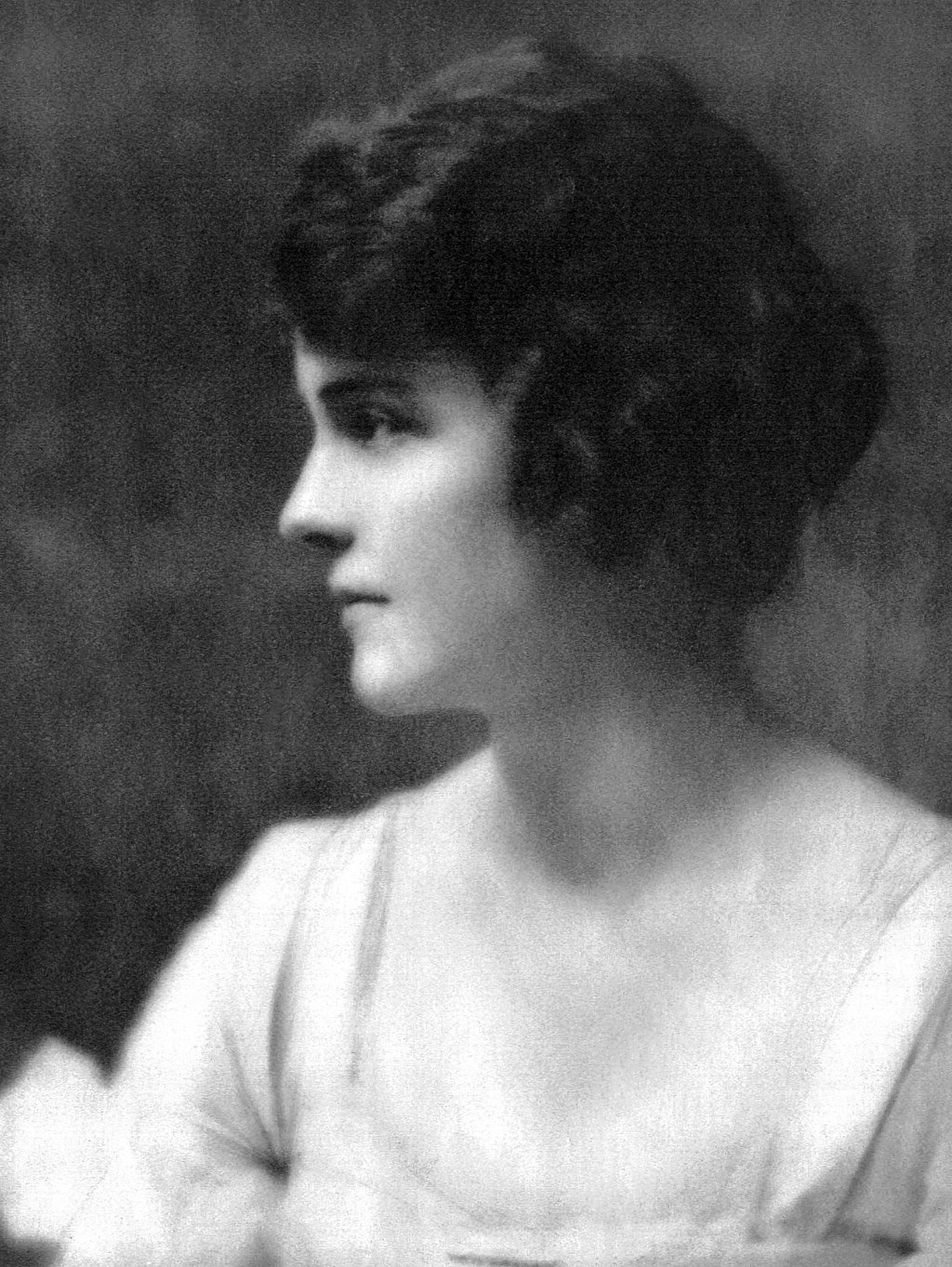
Ginevra King’s photograph was featured in the July 1917 cover of Town & Country. “A beauty with dark curling hair and large brown romantic eyes, she had an air of daring and innocent allure.” 1 Source: Arnold Genthe
What if I told you that The Great Gatsby is based off Fitzgerald’s first love? The most prominently featured character is Daisy Buchanan, the self-absorbed but gorgeous first love of Jay Gatsby. The real life inspiration for Daisy was a wealthy young socialite by the name of Ginevra King. She was one of the “Big Four” debutantes who were unrivaled in Chicago during the 1910s and 1920s.2 King belonged to this exclusive social circle where the wealthiest families in Chicago intermarried with one another.
Fitzgerald met King at a sledding party in St. Paul, Minnesota, on January 4, 1915.3 What ensued was an ill-fated romance while King was attending Westover School in Middlebury, Connecticut, and Fitzgerald was attending Princeton University in Princeton, New Jersey. They wrote constantly to one another, very much caught up in the honeymoon period of their romance. However, there were numerous issues.
Fitzgerald took the romance far more seriously than King did. They often joked about eloping together and wrote passionate letters to one another.4 At one instance, King wrote in her diary that she was “madly in love with him.”3 There were numerous young suitors she flirted with unbeknownst to Fitzgerald. In fact, she was expelled from Westover School because of her flirting with young suitors from her dormitory window.3 King later admitted: “I was definitely out for quantity not quality in beaux, and, although Scott was top man, I still wasn’t serious enough not to want plenty of other attention!” 5
The other issue was that King’s parents did not approve of the middle-class, Catholic Fitzgerald who was not from their wealthy milieu. After being removed from the Westover School, King returned to her parents’ Lake Forest mansion. Fitzgerald had no choice but to travel to see her, which only complicated the issue further. Her parents saw this young middle-class man who they believed was not good enough for their daughter. After all, he was not one of her social circle. It is believed that King’s father scathingly said: “poor boys shouldn’t think of marrying rich girls.”6
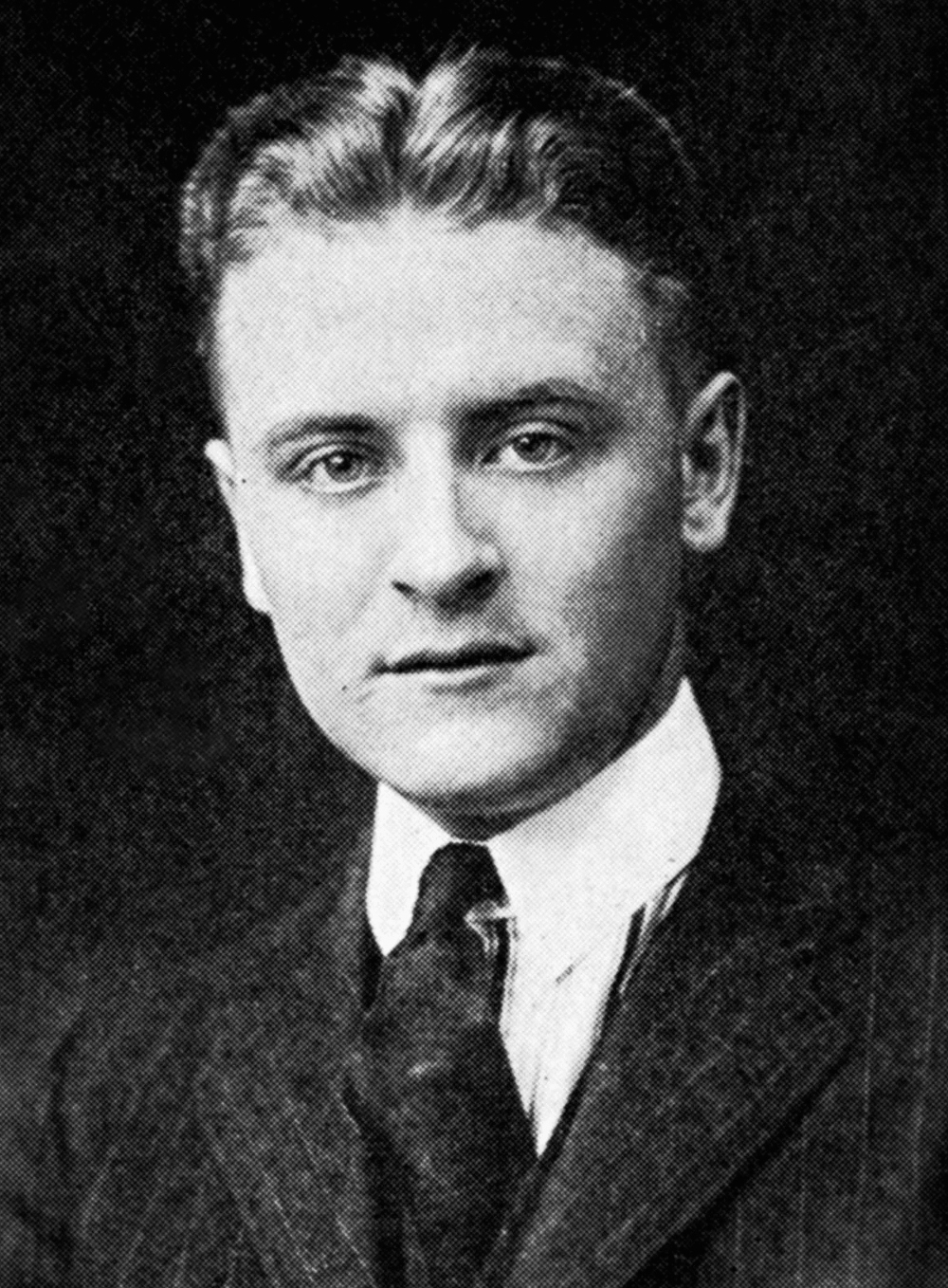
F. Scott Fitzgerald in June 1917. This photograph was published in The Nassau Herald: Class of Nineteen Hundred and Seventeen, Volume 1. “At one point, Ginevra asked for a photograph of him as she coyly professed to recall only that he had “yellow hair and big blue eyes.””8 Source: Mudd Manuscript Library.
January 1917 is when it all fell apart. King came to the realization that Fitzgerald was not marriage material and that he didn’t quite fit in with her social circle, especially the “Big Four” girls. He was heartbroken and later echoed his sentiments while writing The Great Gatsby. According to Christopher Borrelli: “She was partly who Fitzgerald had in mind when he wrote in “Gatsby” of “careless” people of privilege who “smashed up things … then retreated back into their money.”7
Fitzgerald never forgot King. He kept all of her letters until the day he died. This young woman, who went on to marry the wealthy William “Bill” Mitchell, was enshrined in Fitzgerald’s The Great Gatsby. When Fitzgerald died, she received all of the letters that she wrote to him and later said of herself: “I managed to gag through them, although I was staggering with boredom at myself by the time I was through. Goodness, what a self-centered little ass I was!”8

Review
Greta Gatsby returns to her cherished home in West Egg, Long Island, after spending years at an elite boarding school. Her older brother, Jay, is hosting a party at the Gatsby mansion with his gaggle of cronies: Nick Carraway, Jordan Baker, and Tom and Daisy Buchanan. Upon returning, Greta, who sought to reinvent herself by sporting a new bob, is frustrated to find these interlopers in her home. Worse yet, is the fact that they will be there all summer. While she is not excited about the Buchanans, she doesn’t mind Nick’s presence.
Conflict is introduced into the party in the form of Edgar Buchanan, Tom’s rude younger brother. He storms his way into the Gatsby mansion as if he is ready to pick a fight. The situation becomes worse when Tom is found dead in the Gatsbys’ boat. Greta and Nick discover his body accompanied by an all-too-brief suicide note: “Old girl. I’m terribly sorry about all this.” From the start, she suspects that something is quite off about the whole thing. Was it really suicide as it appears? Or was there some more sinister party at work? Was it murder? Greta is determined to get to the bottom of it.
Before diving in, I am going to preface by saying that I never read F. Scott Fitzgerald’s The Great Gatsby. What attracted me to this book was the title, the book blurb, and the cool cover. So, I went into this book with little to no knowledge about the original book that inspired this one.
While reading The Gatsby Gambit (awesome title, by the way), I enjoyed watching the world of the Jazz Age come to life. It was rife with all kinds of cool slang that was used in that time period, especially from a character like Jordan Baker, Daisy’s best friend. It was neat to read descriptions about what people wore, such as Daisy’s stunning pearl necklace that Tom gave her when they were married. It was fun to envision the Gatsby mansion with its devoted cadre of servants. It was like something out of Julian Fellowes’s Downton Abbey.
The mystery and the whodunnit aspects of the story were a lot of fun. Greta was my favorite character, and I had a blast following her along on this journey. While the others were very much wrapped up in their own worlds, she was the only one who consistently focused on finding the perpetrator. At times, it felt like she was the only sane one in the group, aside from dependable, friendly Nick.
My favorite aspect of Greta was that she was strong and brave. As a young woman in the 1920s, she grapples with being “Jay’s sister” and the social expectations of that. It was interesting how she balanced her role as hostess at the Gatsby mansion and amateur sleuth solving a dastardly crime.
Overall, I found the writing to be fun and accessible. However, there were times when the story was slow and meandering. It felt like there the book could have been more condensed. Sometimes there was time spent on boring or pointless things. This book was not as suspenseful as I had hoped.
Some of the characters fell a bit flat for me. Daisy was a frustrating character who it was difficult to connect with. Perhaps that is the point. Traditionally, she is a character who is viewed from afar, on a pedestal. I found her to be childish and lacking in substance.
While I enjoyed the majority of the book, the ending was somewhat anticlimactic and underwhelming. I would definitely read future books by Claire Anderson-Wheeler. This book was fun and definitely had potential. I just wish it was more suspenseful.
I graciously received this complimentary Advanced Reader Copy from Viking and Netgalley.
Rating

Sources
- Milford, Nancy. Zelda: A Biography. New York: Harper & Row, 1970.
- Rothman, Joshua. “Fitzgerald’s Muse.” The Boston Globe (Sunday Edition). Boston, MA: August 5, 2012.
- West, James L.W. The Perfect Hour: The Romance of F. Scott Fitzgerald and Ginevra King, His First Love. New York: Random House, 2005, pp. 21, 35, 49.
- Smith, Dinitia. “Love Notes Drenched in Moonlight: Hints of Future Novels in Letters To Fitzgerald.” The New York Times, September 8, 2003.
- Mizener, Arthur. The Far Side of Paradise: A Biography of F. Scott Fitzgerald, 2nd edition. Boston: Houghton-Miffling Company, 1965, p. 48.
- McKinney, Megan. “The Very Rich Are Different: Scott Fitzgerald and the Lake Forest Four Who Taught Him the Difference.” Classic Chicago Magazine. Chicago, IL: April 24, 2016.
- Borrelli, Christopher. “Revisiting Ginevra King, The Lake Forest Woman Who Inspired ‘Gatsby’.” Chicago Tribune. Chicago, IL: May 7, 2013.
- Bliel, Robert Russell. Temporarily Devotedly Yours: The Letters of Ginevra King to F. Scott Fitzgerald (Thesis). University Park, PA: Pennsylvania State University, December 2008.